Recent Post
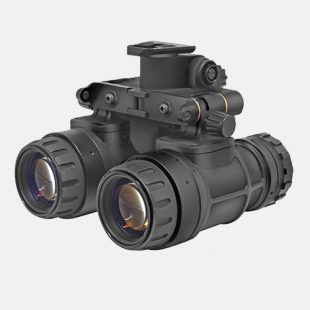
When customers choose an LDNVG31, they often begin with the tube grade.
They compare FOM1400 with FOM1600, FOM1800 or FOM2000. They may also choose between green and white phosphor, or between automatic and manual gain configurations.
Those specifications matter, but a binocular night vision system introduces another question:
How well do the two tubes work together?
An LDNVG31 uses two image intensifier tubes, one for each eye. A pair of individually good tubes does not automatically create a comfortable binocular system. The two images must also feel balanced when viewed at the same time.
For us, tube matching is therefore not a final cosmetic check. It is part of building the complete device.
Two image intensifier tubes rarely have completely identical specification sheets.
One tube may have slightly higher SNR. The other may have slightly higher resolution. Their measured FOM may differ even when both belong to the same advertised performance class.
FOM itself is calculated from resolution and signal-to-noise ratio:
FOM = Resolution × SNR
That makes FOM useful for categorizing performance, but it does not describe every part of the viewing experience. It does not fully describe brightness, phosphor appearance, visible noise, image uniformity or cosmetic marks.
A matched pair therefore does not need to have two perfectly identical FOM numbers.
What matters is whether the differences become distracting when both eyes are viewing the same scene.
Before comparing individual performance, we first make sure the tubes belong in the same configuration.
For a standard pair, we normally look for consistency in:
We would not normally combine one green-phosphor tube with one white-phosphor tube in the same binocular device. We also avoid casually mixing different gain-control arrangements.
This first step removes obvious mismatches before more detailed inspection begins.
We then compare the available tube data.
The main figures include:
| Specification | What we are checking |
|---|---|
| FOM | Whether the tubes belong to a comparable performance class |
| SNR | Whether one image is likely to appear noticeably noisier in low light |
| Resolution | Whether fine-detail performance is reasonably balanced |
| Gain | Whether one side may appear significantly brighter |
| Phosphor | Whether image color and visual presentation are consistent |
| Auto-gating or gain mode | Whether the tubes respond similarly as lighting changes |
We are not simply searching for the two highest numbers available.
A FOM1800 tube and another FOM1800 tube may still differ in brightness, cosmetics or apparent noise. Conversely, two tubes with slightly different FOM figures may form a comfortable pair if their actual images are visually consistent.
After reviewing the specifications, the tubes must be judged visually.
This is where specification-sheet matching becomes real tube matching.
We look for differences in:
A tube may meet the required FOM level and still be unsuitable for a particular pair because its image looks noticeably different from the other tube.
For example, one tube may appear slightly warmer or brighter. One may show more scintillation in darker areas. One may have a visible central blemish while the other has a very clean image.
Small black spots are not automatically performance failures. Their size, location and effect during normal viewing all matter.
In a binocular device, however, the relationship between the two images matters. A cosmetic difference that is easy to ignore in a monocular may become more noticeable when one eye sees it and the other does not.
Tube photographs are useful, but they can also be misleading if the two images were recorded differently.
A fair comparison requires comparable conditions:
If one tube photograph is brighter because the camera increased exposure, it may appear to have better gain or lower noise than it actually does.
For this reason, we do not judge a pair from two unrelated customer-facing photographs alone. The tubes need to be inspected under conditions that make the differences meaningful.
The question is not which photograph looks more impressive.
The question is whether the two tubes produce a balanced binocular image.
Tubes can be compared before assembly, but the final judgement should be made in the actual device.
The LDNVG31 housing introduces its own complete optical system: objectives, eyepieces, pod positioning, interpupillary adjustment and optical-axis alignment.
After installation, we check whether:
This stage matters because a tube is not used in isolation. It is used through the complete optical and mechanical system.
A pair that looks acceptable on separate test equipment may still require reconsideration after final integration.
A binocular system should not force the user to keep noticing the left and right images separately.
Ideally, the user should concentrate on the scene—not on which side is brighter, cleaner or sharper.
A noticeable mismatch can create several problems:
This is why we do not treat tube matching as a purely numerical exercise.
A well-balanced FOM1600 pair can provide a better binocular experience than two poorly matched tubes with higher individual specifications.
There is no single perfect pair for every buyer.
A customer who mainly uses the LDNVG31 in very dark rural conditions may prioritize stronger SNR and lower visible noise.
A customer who records footage through the eyepiece may care more about clean tube cosmetics.
A user who spends long periods wearing the device may be particularly sensitive to brightness or phosphor mismatch.
A buyer selecting an entry-level FOM1400 system may accept minor edge cosmetics in exchange for a more accessible price, provided that the two tubes remain balanced in normal use.
The intended use influences what we prioritize.
That is why we prefer to understand the customer’s environment before recommending a tube pair.
Our matching rule is simple:
We prefer two tubes that work well together over two tubes that only look impressive separately.
Numbers help us identify suitable candidates. Visual inspection shows us how those candidates actually behave. Final installation confirms whether the pair works correctly in the LDNVG31.
A matched pair does not have to be mathematically identical.
It should be close enough in performance, brightness, appearance and image quality that the user can stop thinking about the tubes and concentrate on what is ahead.
That is the purpose of matching.
Tube quality remains one of the most important parts of any LDNVG31 configuration.
But in a binocular device, quality must be considered as a pair.
The best result does not come from selecting two tubes independently and assuming that their shared FOM category makes them matched. It comes from comparing their specifications, inspecting their images and checking the final binocular experience after installation.
A good LDNVG31 should feel like one coherent viewing system.
Not two separate monoculars placed in front of the same user.
No. Small numerical differences are normal. The more important question is whether their SNR, resolution, brightness and visible image characteristics produce a balanced binocular view.
They may be electrically compatible in some configurations, but mixing phosphor colors in one binocular system would normally create a visibly inconsistent image and is not a standard matching approach.
No. FOM is based on resolution and SNR. Apparent brightness is also influenced by gain, optics and the viewing environment.
Not automatically. A small edge blemish may be acceptable. Its position, size and visual impact should be considered together with the condition of the other tube.
Yes. In a monocular, the user sees only one intensified image. In a binocular system, differences between the left and right tube can be noticed simultaneously.
Matching preferences may depend on available tube inventory and the requested performance grade. Customers who are especially sensitive to cosmetics, brightness or tube specifications should communicate that before the device is configured.