Recent Post
A dual-tube night vision goggle can have two good image intensifier tubes, sharp optics and correct focus, yet still feel uncomfortable when both eyes are open.
The problem is not always tube quality.
In a binocular night vision system, the left and right optical channels have to present images that the eyes can combine naturally. If those channels point in slightly different directions, the user may be able to view each side clearly on its own while the binocular image still feels wrong.
Collimation is the alignment of the optical channels so that the left and right images correspond correctly when viewed together.
This is one reason binocular night vision should be evaluated as a complete optical system rather than as two monoculars attached to the same bridge.
The
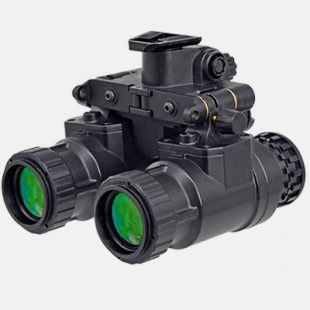
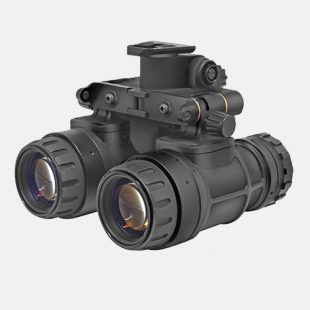
LDNVG31 dual-tube night vision goggle
is an example of this type of binocular system, with two independent intensified optical channels working together in front of the user's eyes.
Each side of a binocular NVG contains its own optical path.
Light enters through an objective lens, reaches an image intensifier tube, appears on the phosphor screen and is then viewed through an eyepiece. The second pod repeats the same process for the other eye.
For binocular viewing to feel natural, those two optical channels need to correspond closely enough that the eyes can fuse them into one scene.
Collimation deals with that directional relationship.
It does not mean that the two housings simply look parallel from the outside. Pod position, bridge geometry and interpupillary adjustment are mechanical features. Collimation concerns the optical axes and the image direction seen through the complete system.
A binocular can therefore appear mechanically symmetrical and still require optical alignment.
Consider two optical channels that are both sharp when viewed separately.
The left tube has good resolution. The right tube does too. Brightness is similar, focus is correct and the lenses are clean.
If the channels do not point at the scene in sufficiently close agreement, the eyes still have to reconcile two images that are spatially displaced.
A small error may not look dramatic when the device is first switched on. The user may simply feel that the binocular image takes more effort to view than expected.
With greater misalignment, edges or distant objects may appear separated when both eyes are open even though either monocular view looks normal.
This distinction matters because replacing the image intensifier tubes would not correct the optical alignment of the two channels.
Tube matching is often discussed when configuring binocular night vision, but it should not be confused with collimation.
Matching deals with the characteristics of the two image intensifier tubes. Depending on the configuration, that can include:
Collimation deals with where the two completed optical channels are pointing.
A well-matched pair of tubes can still be installed in a poorly aligned binocular. Likewise, a correctly collimated binocular can still have an unpleasant left-right imbalance if the tubes are badly matched.
Our article
How We Match Two Image Intensifier Tubes for an LDNVG31
covers the tube-matching side of this process in more detail.
Tube matching makes the two images more consistent. Collimation makes their optical direction agree.
Interpupillary distance, usually shortened to IPD, controls the spacing between the left and right viewing channels so that the eyepieces sit correctly in front of the user's pupils.
If the IPD is too wide or too narrow, the user may lose part of the image or have difficulty maintaining a full view through both eyepieces.
That can feel uncomfortable, but it is a different problem from collimation.
| Adjustment | What it changes | Typical result when incorrect |
| IPD | Spacing between eyepieces / pods | Poor eye positioning or clipped field of view |
| Objective focus | Scene focus distance | Blurred scene |
| Diopter | Eyepiece focus for the user's eye | Phosphor image appears out of focus |
| Collimation | Relationship between the optical axes | Left and right images do not combine naturally |
Correcting IPD cannot compensate for an optical alignment error inside the device. It only places the viewing channels in the correct position relative to the user's eyes.
Before suspecting collimation, each optical channel should produce a properly focused image by itself.
An objective that is focused at the wrong distance can make one side look softer. Incorrect diopter adjustment can create a similar effect at the eyepiece.
If the left and right images differ in sharpness, the eyes may struggle to use them together even when the optical axes are correctly aligned.
This is one reason collimation should not be diagnosed from discomfort alone. Focus, IPD, tube balance and optical condition should also be checked.
The optical side of these issues is covered in
Night Vision Lens Quality: How Optics Affect the Image You Actually See
.
A severely misaligned binocular is relatively easy to recognize because the two images may refuse to merge cleanly.
Small errors are less obvious.
Possible signs include:
None of these symptoms proves by itself that the binocular is out of collimation. Incorrect IPD, focus differences, helmet position and tube mismatch can produce some similar complaints.
The difference is that collimation is an alignment property of the device, not an adjustment the user normally changes during routine operation.
Optical misalignment can occur in more than one direction.
If one channel presents the scene slightly above or below the other, the eyes have to compensate vertically. A horizontal difference asks the eyes to converge or diverge differently from what the viewed distance normally requires.
The acceptable amount of error is therefore handled as a tolerance rather than a simple statement that the two channels are either "aligned" or "not aligned."
The purpose of a collimation check is to confirm that the completed binocular falls within the intended alignment range of the system.
This is also why judging alignment by looking at the external housings is not sufficient.
Modern binocular NVGs often allow each pod to articulate outward. The mechanism improves flexibility and lets the user move one or both optical channels away from the eyes.
That movement places additional demands on the mechanical structure.
When a pod returns to its operating position, the optical relationship between the two channels should remain repeatable. Excessive mechanical play, poor assembly tolerance or damage to the bridge can affect how consistently the system returns to the same geometry.
Articulation itself is not collimation, but the mechanical system has to support the optical alignment that was established during assembly.
A sharp lens does not guarantee correct collimation.
A perfectly aligned binocular also cannot make a poor lens sharp.
The objective lenses, eyepieces and mechanical mounting surfaces determine how each optical channel is formed and held inside the housing. Differences in component positioning can therefore affect the final optical axis even when the individual lenses meet their own specifications.
For a complete binocular build, optical quality and alignment have to be checked separately.
This becomes especially relevant after major optical service. If a component affecting the optical path or pod geometry is replaced or disturbed, the completed system should be checked again rather than assuming the previous alignment remains unchanged.
A monocular has one intensified optical channel. Its image must be focused, clear and mechanically stable, but there is no second channel that has to agree with it.
A binocular adds another complete optical path.
The manufacturer now has to consider:
This explains why two good monocular channels do not automatically become a good binocular when they are placed side by side.
Collimation is best treated as part of final optical integration.
Before alignment is evaluated, both channels should already be mechanically assembled and capable of producing normal focused images. Tube selection, optical installation and basic functional checks come earlier in the build.
The completed binocular can then be evaluated with suitable collimation equipment or an optical test setup designed to compare the two channels against a common reference.
This is different from simply looking through the goggles and deciding that the image appears comfortable. User observation is useful as a final check, but a controlled optical reference gives the manufacturer a repeatable way to evaluate alignment.
For the
LDNVG31 / PVS-31-style platform
,
the final system includes two image intensifiers, objectives, eyepieces, articulating pods and IPD adjustment. All of those components have to work as one binocular assembly.
A correctly assembled device should not require routine collimation adjustments by the user.
A new optical check becomes more relevant when work has changed the geometry of the system.
Examples include major housing repair, pod or bridge replacement, installation work involving the optical path, or an impact severe enough to raise concern about the mechanical alignment of the device.
Replacing image intensifier tubes alone does not mean that the new tubes themselves need to be "collimated." The concern is whether the complete optical channels remain correctly aligned after the device has been opened, serviced and reassembled.
That distinction is useful because collimation belongs to the assembled optical system, not to the FOM or model number of the tube.
FOM describes image intensifier performance through resolution and signal-to-noise ratio.
It does not describe the relative direction of the left and right optical channels.
A binocular fitted with two FOM 2000 tubes can still have poor alignment. A correctly assembled FOM 1600 system can still provide a more natural binocular image if the tubes, optics and alignment work well together.
This is one reason complete-device quality cannot be reduced to the highest number printed on the image intensifier specification sheet.
| What you notice | Possible cause | Is it necessarily collimation? |
| One side is blurry | Objective focus or diopter | No |
| One image is brighter or noisier | Tube characteristics or gain difference | No |
| Full field is difficult to see through both eyepieces | IPD or helmet positioning | No |
| Both channels are clear separately but difficult to merge | Optical alignment should be checked | Possibly |
| One channel has noticeably different edge geometry | Lens distortion or optical mismatch | Not necessarily |
Separating these problems prevents collimation from becoming a catch-all explanation for every uncomfortable binocular image.
Specification sheets are useful for selecting image intensifier tubes and optical components, but they cannot describe every property of the assembled binocular.
Two tubes can have similar FOM and SNR. Both objective lenses can meet the same design specification. Both eyepieces can focus correctly.
The finished device still needs the two optical channels to agree spatially.
That is the role of collimation.
For manufacturers and builders, it belongs alongside tube matching, optical inspection and mechanical assembly as part of evaluating the complete binocular system.
The LDNVG31 illustrates why these separate checks are necessary.
It uses two image intensifier channels and supports 40-degree or 50-degree optical configurations. Its pods articulate independently and the binocular spacing can be adjusted for different users.
The quality of the final image therefore depends on more than the two tubes alone.
Tube selection affects brightness, noise, resolution and screen appearance. Objective and eyepiece quality affect the optical image. Mechanical assembly controls how consistently the pods are positioned. Collimation determines whether the two completed channels are properly aligned for binocular viewing.
More information about the platform is available in
Head-mounted PVS31 Night Vision Goggles LinduNV LD-NVG31
.
Buyers often ask for the FOM first, which is reasonable because it gives a quick indication of tube performance class.
For a complete binocular, a few additional questions are useful:
These questions say more about the finished binocular than comparing FOM alone.
Collimation is one part of building a binocular night vision system that behaves like a single viewing device.
Tube matching helps the left and right images remain visually consistent. Good lenses preserve detail and contrast. Correct IPD places the eyepieces in front of the user's eyes. Collimation controls the optical relationship between the two completed channels.
None of these checks replaces the others.
A dual-tube NVG can contain excellent components and still deliver a poor binocular experience if the channels are not integrated correctly. For that reason, optical alignment should be evaluated on the finished device, not assumed from the quality of the individual tubes.
You can also browse the
LinduNV Store Night Vision Goggles collection
for other binocular configurations.
Night vision collimation is the alignment of the optical channels in a binocular or multi-channel night vision device so that their images correspond correctly when viewed together.
Each eye receives a separate intensified image. If the two optical channels are misaligned, the eyes have to work harder to combine them. A correctly aligned system provides a more natural binocular view.
No. IPD adjusts the spacing of the viewing channels to match the user's pupils. Collimation concerns the direction and relationship of the optical axes inside the binocular system.
No. Tube matching compares characteristics such as brightness, SNR, resolution, phosphor appearance and screen condition. Collimation concerns optical alignment after the complete channels are assembled.
Yes. Tube quality is only one part of the system. Incorrect focus, IPD, optical mismatch or collimation can affect the binocular viewing experience even when both image intensifier tubes perform well individually.
No. FOM describes image intensifier performance through resolution and SNR. It does not describe the alignment of the left and right optical channels.
The replacement tube itself is not what gets collimated. After a binocular has been opened, serviced and reassembled, checking the completed optical alignment is appropriate if the work may have affected the optical or mechanical geometry of the system.
A user can notice obvious alignment problems, but controlled optical test equipment provides a more repeatable way to evaluate the relationship between the two channels. Visual comfort alone does not separate collimation from IPD, focus, tube matching or other optical issues.
Current LDNVG31 configurations are available on the
LinduNV Store LDNVG31 product page
.