Recent Post
A night vision device can have a sealed housing, a waterproof rating and clean optics, yet still develop fog inside the optical system.
That sounds contradictory at first. If the housing is designed to keep water out, where does the moisture come from?
The answer is that waterproofing and internal moisture control address different parts of the same environmental problem.
A waterproof housing helps keep moisture outside. A dry, properly purged interior reduces the moisture already trapped inside the optical system.
This distinction matters during manufacturing, repair and long-term service. A housing can resist rain and external water while still containing humid air left inside during assembly.
Night vision nitrogen purging is a process used to reduce moisture-containing ambient air inside a sealed optical housing and replace it with dry nitrogen.
The goal is environmental control inside the device.
It does not increase the FOM of the image intensifier tube, improve SNR or change the resolution of the optical system. Instead, it reduces the amount of water vapor available to condense on internal optical surfaces when temperature conditions change.
The same principle is used in other sealed optical instruments. ZEISS, for example, explains that nitrogen filling is used in sealed optical housings to avoid trapping humid air that could later condense at low temperatures. Their explanation of
sealed optical housings and nitrogen filling
provides a useful example of the principle.
The exact servicing method depends on the housing design, so purging should be treated as part of the manufacturer's assembly or maintenance procedure rather than as a universal user adjustment.
Night vision specifications often list an IP rating such as IP65 or IP67.
The IP Code comes from
IEC 60529
,
which classifies degrees of protection provided by electrical equipment enclosures.
For an NVG housing, an IP rating provides useful information about resistance to external dust and water under specified test conditions.
What it does not tell you is how dry the air was when the optical chamber was closed.
Imagine a housing assembled in a humid environment. The seals may work correctly and prevent outside water from entering after assembly, but the air sealed inside can still contain water vapor.
Waterproofing may actually keep that same humid air trapped inside until the housing is opened again.
| Area | Sealing / Waterproofing | Nitrogen Purging |
| Main purpose | Limit external water, dust and air exchange | Reduce moisture-containing air inside the housing |
| Main concern | Ingress from outside | Internal humidity and condensation |
| Depends on | Housing design, O-rings and interfaces | Assembly environment and service process |
| Replaces the other? | No | No |
Water does not need to enter the housing as a visible drop of liquid.
Normal atmospheric air contains water vapor. When the housing is open, the internal optical components are exposed to that air.
This happens during initial assembly, but it can also happen later during service.
Typical examples include:
If the device is simply closed again while humid air remains inside, that moisture becomes part of the internal environment.
The problem may not be immediately visible. At room temperature the device can appear completely normal.
Internal humidity becomes more noticeable when temperature changes bring an optical surface close to the point where water vapor can condense.
This can happen when an NVG is moved between a warm indoor environment and cold outdoor air, or when the device experiences a substantial temperature change during transport or use.
If enough moisture is present, a thin layer of condensation can form on an internal lens or other optical surface.
The user may see:
The image intensifier may be functioning normally while the optical path in front of or behind it is partially obscured by condensation.
A fogged objective lens does not automatically mean the housing has a sealing problem.
External condensation is common on optical equipment. A cold lens exposed to warmer, humid air can fog in the same way as eyeglasses or a camera lens.
External moisture is located on a surface the user can reach. It may disappear after the device acclimates or after the exposed optical surface is cleaned correctly.
Internal fogging is more significant because the affected surface cannot be reached without opening the system.
If the exposed objective and eyepiece surfaces are clean but the haze remains behind them, the internal optical environment deserves closer inspection.
Routine cleaning and storage still matter. Our
Night Vision Goggle Routine Maintenance Guide
covers lens cleaning, moisture control and storage practices for PVS-14 and PVS-31-style systems.
A dry internal environment only helps if the housing can maintain it.
Night vision housings use sealing interfaces around components that may need to be removed during manufacturing or service.
Depending on the housing, these can include the objective assembly, eyepiece assembly, battery compartment, housing joints, controls, pods and service ports.
O-rings are a common part of these interfaces.
A seal can be affected by damage, contamination, incorrect seating or wear. A small problem may not immediately produce obvious water intrusion, but it can make it more difficult for the housing to maintain the intended internal environment over time.
For this reason, purging should not be viewed as a repair for a leaking housing.
Purging controls the internal atmosphere. The housing and seals have to keep that atmosphere isolated afterward.
Modular night vision systems are designed so that major components can be replaced.
That is useful for long-term maintenance, but every time the sealed optical chamber is opened, the previous internal environment is disturbed.
Replacing a tube is a good example.
The new image intensifier does not itself need nitrogen in order to gain FOM or resolution. The issue is the housing around it. Once the optical chamber has been opened, the device needs to be reassembled with attention to cleanliness, seals and internal moisture control.
The same principle applies after work involving:
The service process should restore the device as a complete system rather than treating each replaced component in isolation.
Changing an objective or eyepiece is usually discussed in terms of focus, field of view and image quality.
There is also a mechanical and environmental side to the work.
The lens assembly has to sit correctly in the housing, its sealing interface has to remain intact, and the internal optical path has to stay clean.
This is why lens quality should not be judged separately from installation quality.
Our article
Night Vision Lens Quality: How Optics Affect the Image You Actually See
explains how the objective and eyepiece influence the image before and after the image intensifier.
A binocular night vision device contains two separate optical channels.
After service involving pods, objectives, eyepieces or other components that affect the optical geometry, environmental sealing is not the only concern.
The left and right channels also need to remain correctly integrated as a binocular system.
This is where collimation becomes relevant.
Collimation and nitrogen purging solve completely different problems, but both illustrate the same point: opening and rebuilding an NVG involves more than simply installing the replacement part.
For the optical alignment side, see
What Is Night Vision Collimation? Why Dual-Tube NVGs Need Proper Optical Alignment
.
Yes.
An IP67 rating and a dry internal optical chamber are not competing specifications.
A properly sealed IP67 housing can resist external ingress under the conditions associated with that rating while still containing humid air if moisture was trapped during assembly.
Conversely, a housing could initially contain dry gas but fail to preserve that condition if a seal later becomes damaged.
Environmental reliability therefore has two sides:
1. Control the atmosphere inside the device.
2. Maintain a housing and sealing system capable of preserving it.
Another source of confusion is the term "anti-fog."
An optical surface may use a coating intended to improve performance under conditions where condensation would otherwise affect the exposed lens.
That does not mean the internal housing can be filled with humid air without consequence.
Lens coatings, housing seals and internal moisture control operate at different levels of the system.
A coating cannot compensate for water vapor condensing elsewhere inside the optical chamber.
Nitrogen purging is most useful when the housing itself is designed to maintain a controlled internal environment.
Mechanical interfaces, lens mounting surfaces, O-ring grooves, battery compartments and service access points all influence environmental performance.
LinduNV supplies modular
night vision housing kits
for PVS-14, PVS-31 and other night vision platforms.
For example, the
LD-NVG31 PVS-31-style housing
is designed as a serviceable binocular platform that can be supplied as a housing with optics or as part of a complete system.
Serviceability is useful, but it also makes correct reassembly important whenever the sealed optical system has been opened.
Manufacturing quality control should not treat a purge as proof that the housing is waterproof.
A waterproof test asks whether the enclosure provides the intended environmental protection.
A purge process deals with the atmosphere inside that enclosure.
Both become more meaningful when they are part of complete-device inspection rather than isolated specifications.
LinduNV's
Technical Support
page lists an IP8X waterproof tester among its technical equipment, alongside an MTF transmitter and resolution target used for optical evaluation.
This separation between environmental, optical and mechanical inspection is important because one successful test cannot confirm every part of an NVG's performance.
A hazy image does not always mean there is moisture inside the housing.
Before suspecting internal condensation, the exposed objective and eyepiece should be inspected carefully.
Other possible causes include:
If the external optical surfaces are clean and the haze remains visibly behind them, internal inspection may be appropriate.
Repeatedly opening the housing in an uncontrolled environment is usually counterproductive because it exposes the internal optics to more dust and moisture.
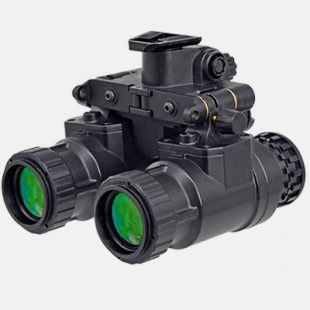
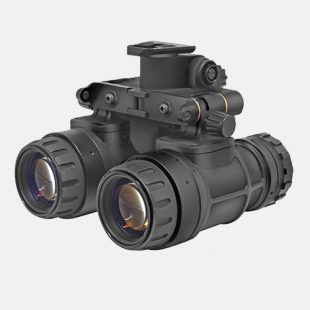
The LDNVG31 is a useful example because it combines two optical channels, removable image intensifier tubes, objective and eyepiece assemblies, articulating pods and environmental sealing in one binocular system.
The current complete LDNVG31 is specified with an IP65 waterproof rating.
That specification is one part of the complete device. Tube matching, lens quality, optical alignment, sealing and correct assembly still influence how the finished binocular performs.
Readers who want to see the current complete system can view the
LDNVG31 Night Vision Goggles PVS31
on the LinduNV Store.
This is intentionally a product reference rather than the main focus of the article. The purpose of the discussion here is to explain what environmental sealing and internal moisture control mean at the system level.
Nitrogen purging is easy to misunderstand because the result is invisible when everything is working correctly.
A user can see a tube image, measure an IPD range or notice a lens distortion problem. A dry internal atmosphere normally gives no visible indication at all.
Its value becomes apparent only when moisture would otherwise condense inside the housing.
For that reason, a good NVG build should not be judged by one specification alone.
The image intensifier has to perform correctly. The optics have to preserve image quality. The housing has to maintain its mechanical and environmental integrity. In a binocular, the two channels also need correct optical alignment.
Internal moisture control is another part of that same system.
Waterproofing keeps the outside environment from entering. Purging helps prevent the inside environment from becoming the problem.
Night vision nitrogen purging is a process used during assembly or servicing to reduce moisture-containing ambient air inside a sealed optical housing and replace it with dry nitrogen.
A waterproof housing can limit external water ingress while still containing humid air that was trapped during assembly or servicing. Under suitable temperature conditions, moisture in that air can condense on internal optical surfaces.
No. An IP rating concerns enclosure protection against external ingress under defined test conditions. Nitrogen purging concerns the atmosphere and moisture inside the optical housing.
No. These are image intensifier or optical performance characteristics. Nitrogen purging is related to environmental control and condensation prevention inside the housing.
Yes. When tube replacement requires opening the sealed optical chamber, reassembly should include inspection of cleanliness, seals and the internal environment according to the housing's service requirements.
It can. If a sealing interface no longer works as intended, humid outside air may gradually enter the housing. Purging cannot permanently compensate for a damaged or incorrectly installed seal.
Not necessarily. External condensation can occur on any cold optical surface exposed to warmer humid air. Internal fogging becomes more likely when the exposed surfaces are clean but haze remains behind them.
No. Lens coatings affect the optical surface on which they are applied. They do not remove moisture-containing air from elsewhere inside the housing.
For most users, opening the housing is not the first step. Uncontrolled disassembly can introduce additional humidity, dust and contamination and may disturb existing seals. Persistent internal fogging is better evaluated during proper servicing.