Recent Post
The most obvious difference between a dual-tube night vision goggle and a panoramic NVG is field of view.
A conventional binocular system commonly provides around 40° to 50° of horizontal viewing coverage. A four-tube panoramic system can expand that to approximately 120°.
That difference is substantial, but field of view is only the beginning.
Moving from two image intensifier channels to four changes the optical architecture, tube-matching requirements, alignment process, power demand, weight distribution and servicing complexity of the complete NVG.
Understanding those differences is more useful than treating panoramic night vision as simply a wider version of a dual-tube binocular.
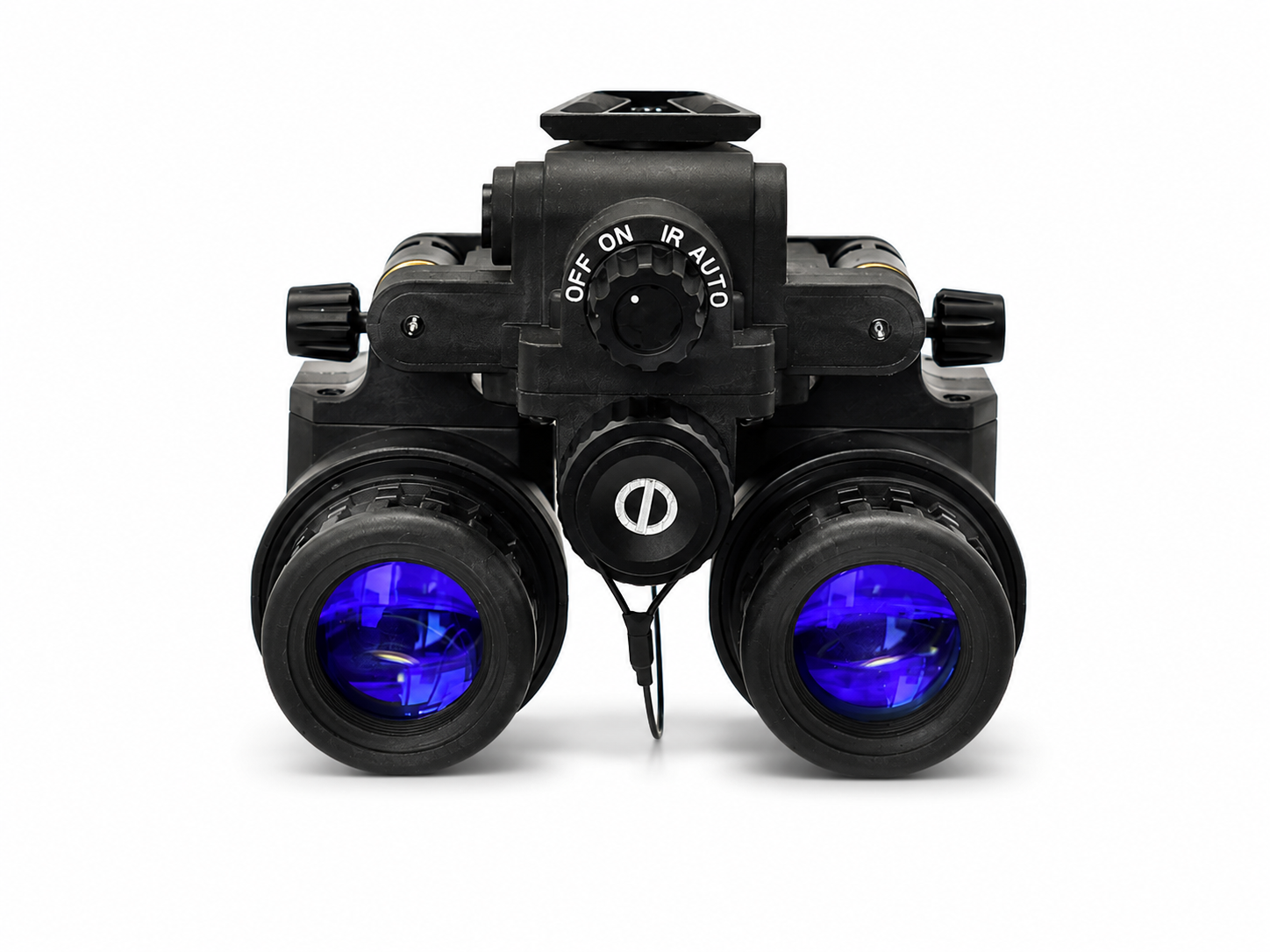
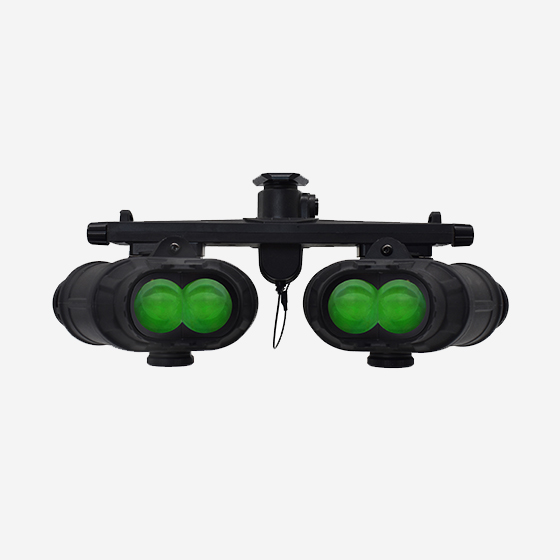
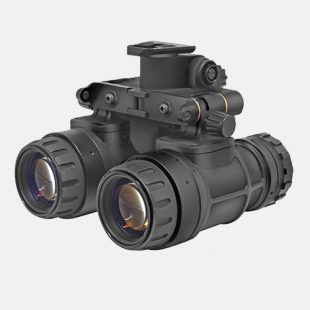
A dual-tube night vision goggle contains two intensified optical channels.
One channel serves the left eye and one serves the right eye. Each normally contains its own objective lens, image intensifier tube and eyepiece.
The
LinduNV LD-NVG31
is an example of this architecture.
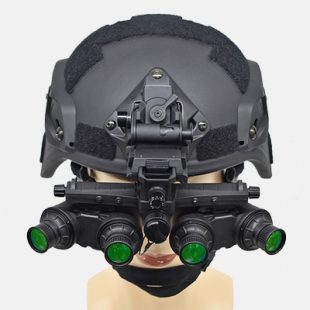
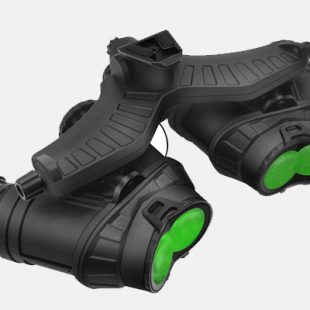
A panoramic NVG increases the system to four image intensifier tubes and four objective channels.
In a typical four-tube panoramic arrangement, the two central channels look primarily forward while the outer channels are angled outward. Their fields overlap so that the user sees a much wider combined scene.
LinduNV's
GPNVG-18
uses this four-channel panoramic architecture.
The LD-NVG31 platform uses a conventional binocular field of view in the approximately 40° to 50° range depending on the optical configuration.
The current GPNVG-18 Pro is specified at 120±2°.
| Current LinduNV Example | Optical Channels | Field of View |
| LD-NVG31 | 2 | Approx. 40°–50°, depending on configuration |
| GPNVG-18 Pro | 4 | 120±2° |
The practical effect is that a panoramic system places much more of the surrounding scene inside the intensified view at one time.
With a narrower binocular field, the user often has to rotate the head to bring objects outside the central viewing area into the image.
A panoramic system reduces that need by extending intensified coverage farther toward the left and right.
The benefit of a wider field is not simply that the image looks larger.
It changes how much environmental information can remain visible without moving the head.
That can matter during:
The central viewing area remains important, but the outward-facing channels reduce the amount of surrounding space that falls completely outside the intensified image.
Independent industry examples show the same basic architecture. Janes reported that a recent Thales four-tube panoramic NVG exceeds 120° FOV, while conventional binocular systems typically remain around 42° to 50°.
See the
Janes overview of panoramic NVG architecture
for another industry example.
It is useful to think of panoramic night vision as one integrated optical system.
The central channels provide the main forward-looking binocular image. The outer channels extend the field toward the sides.
Those fields need to overlap in a way that allows the user to perceive a continuous panoramic scene rather than four unrelated circular images.
This does not mean the system electronically combines four camera feeds. In an analog image-intensifier panoramic NVG, the wider view is produced through the arrangement of the separate optical channels and how their visible fields overlap at the eyepieces.
That distinction becomes important when discussing alignment and manufacturing.
Tube matching already matters in a conventional binocular.
Two tubes may belong to the same FOM category while still differing in apparent brightness, noise, phosphor tone, gain or cosmetic condition.
This is why LinduNV evaluates the two tubes in an LD-NVG31 as a pair rather than selecting them entirely independently.
The process is explained in
How We Match Two Image Intensifier Tubes for an LDNVG31
.
A four-tube panoramic system expands this problem.
Instead of managing the visual relationship between two intensified channels, the manufacturer now has four channels contributing to one combined viewing system.
That means more opportunities for differences in:
The four tubes do not need mathematically identical specification sheets, but noticeable differences between channels can become distracting when their images are viewed together.
Tube matching and optical alignment are separate issues.
A tube can have excellent specifications and still sit inside an optical channel that is not correctly aligned with the rest of the system.
In a dual-tube NVG, the left and right optical channels need to correspond closely enough for both eyes to combine them naturally.
We explain that process in
What Is Night Vision Collimation?
.
A panoramic system adds two more optical channels and additional overlap relationships.
The manufacturer therefore has to control not only the central binocular relationship but also how the outward channels join the wider visual field.
More optical channels increase field of view, but they also increase the number of relationships that must remain correctly integrated.
This is one reason panoramic assembly should be treated as a complete optical integration process rather than four independent monocular builds.
Tube count and tube performance are different specifications.
A four-tube system does not automatically have higher SNR, higher resolution or higher FOM than a dual-tube system.
Those characteristics still depend on the individual image intensifiers installed in the device.
Both LinduNV dual-tube and panoramic platforms can be configured with different image intensifier performance grades and phosphor options.
The panoramic architecture changes spatial coverage. It does not replace the underlying tube specification.
A dual-tube device with stronger tubes may therefore provide better low-light image quality inside its field of view than a panoramic system using lower-performance tubes.
Four complete optical channels require more hardware.
There are two additional image intensifier tubes, two additional objective paths and a larger housing structure to support the panoramic geometry.
The difference is visible in current LinduNV specifications.
| System | Tube Count | Published Weight |
| LD-NVG31 | 2 | 480 g |
| GPNVG-18 Pro | 4 | 780 g |
That is roughly 300 g of additional front-mounted device weight before considering the rest of the helmet setup.
Helmet fit, mount position, counterweight, battery placement and individual tolerance all affect how that difference feels in use.
A specification sheet usually lists the weight of the NVG itself.
The user experiences the complete helmet system.
That includes:
A heavier device positioned farther forward creates a different load on the neck than the same amount of mass positioned closer to the head.
This is one reason external battery packs can have an ergonomic role in addition to their electrical role.
Moving some battery mass toward the rear of the helmet can change front-to-back balance without reducing total system weight.
Power consumption is another difference that appears once the number of intensified channels increases.
The current LD-NVG31 specification lists power consumption below 0.1 W and operating time of 40–100 hours depending on battery and operating conditions.
The GPNVG-18 Pro is specified below 0.2 W and lists 30–80 hours.
| System | Battery | Power | Published Runtime |
| LD-NVG31 | CR123 / AA | <0.1 W | 40–100 h |
| GPNVG-18 Pro | CR123 | <0.2 W | 30–80 h |
These runtime figures should be read as operating ranges rather than fixed guarantees. Battery chemistry, temperature, battery condition and IR use can affect the result.
For a deeper explanation, see
Night Vision Battery Systems Explained: AA vs CR123A vs External Battery Packs
.
The current GPNVG-18 Pro supports an external battery pack.
This provides a way to carry additional energy away from the front housing while also giving the helmet system more freedom to distribute battery mass.
The LinduNV external pack uses four CR123A cells and a 5-pin interface for compatible PVS-31, GPNVG-18 and COTI configurations.
The pack, connector, device voltage range and electrical architecture all have to work together.
A dual-tube NVG already contains a substantial number of optical and mechanical components.
A panoramic system adds two additional intensified channels and the structures required to hold them in the correct geometry.
That affects servicing in several ways.
This does not mean a four-tube system is inherently unreliable.
It means there are more components whose condition and installation can affect the finished device.
Image intensifier tubes are major performance components in either system.
With a dual-tube NVG, the manufacturer is managing a pair.
With a panoramic NVG, four channels have to be considered together.
If one tube is replaced later, the replacement still has to be electrically and mechanically compatible, but visual consistency with the remaining tubes also matters.
The replacement does not necessarily need the exact same FOM number. Brightness, phosphor appearance, noise and other visible characteristics also affect how naturally the channels work together.
A 120° panoramic field substantially reduces the amount of head movement needed to check the surrounding scene.
It does not eliminate head movement entirely.
Objects can still fall outside the intensified field, particularly above, below or behind the user.
Panoramic night vision should therefore be understood as expanded forward and peripheral coverage rather than complete environmental coverage.
A dual-tube binocular asks the user's eyes to combine two primary channels.
A four-tube panoramic device introduces additional visual overlap toward the peripheral areas.
The user may notice transitions between the central and outer intensified fields, particularly when first using a panoramic system.
Good optical integration helps keep those transitions from becoming unnecessarily distracting, but the viewing experience remains structurally different from looking through a conventional two-channel binocular.
A dual-tube system has fewer forward optical assemblies and a narrower overall front profile.
That affects more than weight.
The device takes up less lateral space around the face and helmet. Storage, transport and handling can also be simpler.
For users who do not require panoramic peripheral coverage, the compactness of a dual-tube architecture remains a significant design advantage.
It is important to separate panoramic architecture from the field of view of an individual optical channel.
A four-tube system reaches approximately 120° by arranging multiple channels across different viewing directions.
It does not require one single 120° objective feeding one image intensifier tube.
Each channel still has its own objective, image intensifier and eyepiece system.
The panoramic result comes from the geometry of the complete multi-channel assembly.
| Specification | LD-NVG31 | GPNVG-18 Pro |
| Architecture | Dual-tube binocular | Four-tube panoramic |
| Image intensifier tubes | 2 | 4 |
| Magnification | 1× | 1× |
| FOV | Approx. 40°–50° depending on configuration | 120±2° |
| Weight | 480 g | 780 g |
| Power consumption | <0.1 W | <0.2 W |
| Published runtime | 40–100 h | 30–80 h |
| External battery pack | Supported | Supported |
| IPD range | 50–85 mm | 50–85 mm |
| Waterproof rating | IP65 | IP65 |
A dual-tube architecture is well suited to users who want binocular night vision without the size and weight of a panoramic four-channel system.
Its advantages include:
The tradeoff is less intensified peripheral coverage.
Readers who want to review the current configuration can view the
LDNVG31 Night Vision Goggles PVS31
on the LinduNV Store.
The main reason to move to four tubes is wider intensified peripheral coverage.
The GPNVG architecture provides substantially more horizontal scene information without requiring the user to turn the head as often.
That benefit comes with:
The current retail configuration is available on the
GPNVG-18 Pro Night Vision Goggles
page.
No.
A properly configured dual-tube system already gives both eyes independent intensified channels and binocular viewing.
Four tubes primarily change the width of the intensified field.
They do not make tube matching, focus, lens quality or collimation irrelevant.
Those aspects become more involved as the optical system becomes more complex.
The number of image intensifier tubes is easy to compare because it is visible immediately.
The more useful comparison is what those tubes require from the rest of the NVG.
A dual-tube system has to integrate:
A panoramic system adds another pair of optical channels and then has to maintain the intended panoramic relationship between them.
That is the engineering difference behind the wider field of view.
Panoramic and dual-tube night vision goggles are based on the same core image-intensifier technology, but they use it in different optical architectures.
A dual-tube system such as the LD-NVG31 provides two-channel binocular viewing in a relatively compact and lightweight package.
A four-tube system such as the GPNVG-18 Pro adds outward-facing channels to expand the horizontal intensified field to approximately 120°.
The extra peripheral coverage is significant, but it comes with additional weight, electrical demand, tube-matching requirements and optical integration complexity.
Panoramic night vision trades simplicity and weight for wider intensified coverage. Dual-tube night vision keeps the system smaller and lighter while retaining true binocular viewing.
Neither architecture should be judged only by its FOV number. The finished system still depends on tube quality, optics, alignment, power design, housing geometry and final assembly.
A dual-tube NVG uses two intensified optical channels, one for each eye. A typical panoramic NVG uses four channels, with two central channels and two outward-facing channels that extend the horizontal field of view.
The current LinduNV GPNVG-18 Pro is specified at 120±2°. Conventional dual-tube systems typically provide a much narrower binocular field.
Not automatically. Tube count affects field-of-view architecture. SNR, resolution, FOM, gain, phosphor and optical quality still determine the performance of the individual intensified channels.
The two central tubes provide the primary forward view while the outward-facing channels extend intensified coverage toward the sides. Their overlapping fields create the wider panoramic viewing architecture.
In the current LinduNV range, yes. The LD-NVG31 is specified at approximately 480 g, while the GPNVG-18 Pro is specified at approximately 780 g.
The current LinduNV specifications reflect a higher electrical load: the LD-NVG31 is listed below 0.1 W, while the four-tube GPNVG-18 Pro is listed below 0.2 W.
No. Exact numerical identity is not normally required. What matters is that the tubes are compatible with the system and sufficiently consistent in brightness, noise, phosphor appearance and overall image behavior that channel differences are not unnecessarily distracting.
A four-channel system has more optical-axis and overlap relationships to control than a two-channel binocular. That makes complete-system optical integration more involved.
Yes. The current LinduNV GPNVG-18 Pro supports an external battery pack. Compatible packs can provide additional energy storage and allow battery mass to be positioned separately from the front-mounted NVG.
The current
LDNVG31
and
GPNVG-18 Pro
product pages list the current configurations and technical specifications.