Recent Post
Many first-time buyers look at digital night vision because the price is easier to accept. The product photos look clean, the screen looks bright, and video recording sounds useful.
That is not wrong. Digital night vision has its place.
But if you are buying night vision for serious outdoor use, helmet-mounted movement, or real low-light observation, it is worth understanding what changes when you move from digital night vision to a PVS-14 style image intensifier monocular.
They are not just two price levels of the same product. They are different tools.
Digital night vision is usually a camera-and-screen system. A PVS-14 uses an image intensifier tube. That difference affects how the device performs in darkness, how it feels when you move, and whether it can be trusted for longer use outside.
The most common misconception is relying solely on the visual quality shown in product photos.
In controlled settings—especially when infrared (IR) illumination is active—digital night vision devices can produce remarkably clear images. For buyers who have never used professional-grade night vision equipment, this visual performance is often highly convincing and appealing.
However, product photos fail to reveal the full picture.
They do not show image lag when turning your head.
They do not demonstrate the device's reliance on infrared (IR) light.
They do not show whether the image remains clear and usable when walking under tree cover or over uneven, pothole-filled terrain.
They do not show how comfortable your eyes feel after an hour of use.
This is precisely what sets the PVS-14 apart from digital night vision devices.
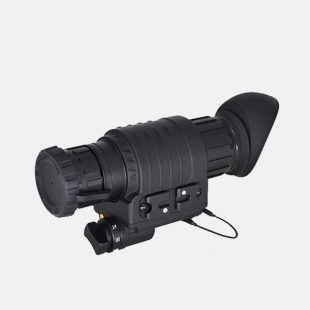
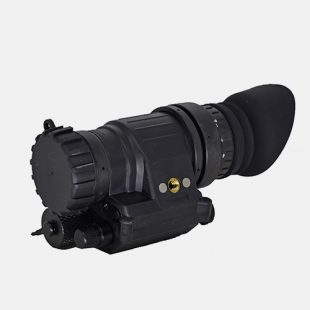
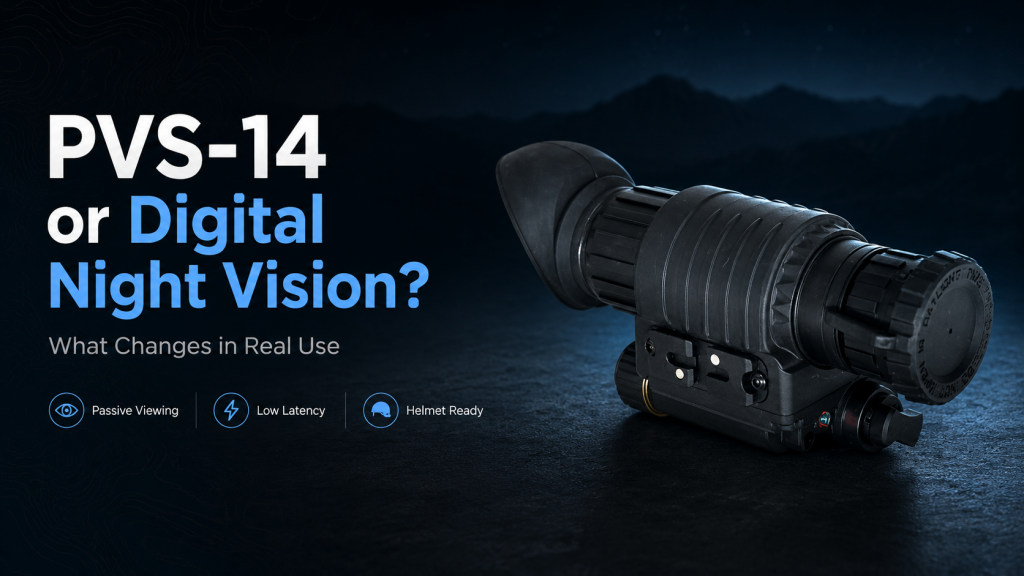
The PVS-14 is a monocular night vision device that utilizes an image intensifier tube to amplify ambient light, rather than simply projecting processed video footage onto your eyes.
This results in a more intuitive visual experience.
The image responds naturally as you turn your head. Whether you are walking, running, scanning the area, or repositioning, the device moves seamlessly in sync with your actions. This is one of the reasons why the PVS-14 configuration remains widely used for helmet-mounted setups to this day.
The excellence of the PVS-14 lies not merely in its brightness, but in its ease of use and reliability during real-time operation. For buyers looking to assemble a professional-grade night vision kit, this factor is often more critical than many realize.
Digital night vision is not useless. It can be a reasonable choice for the right job.
It is usually more affordable. Many models can record photos or video. Some can be used during the day. For short-range observation around a house, farm, campsite, or fixed viewing position, digital night vision can work well.
The key phrase is: fixed viewing position.
If the user is standing still, using IR illumination, and observing a known area, digital night vision can be practical.
The problem starts when the buyer expects digital night vision to behave like an image intensifier device in real low-light movement.
That is usually where disappointment happens.
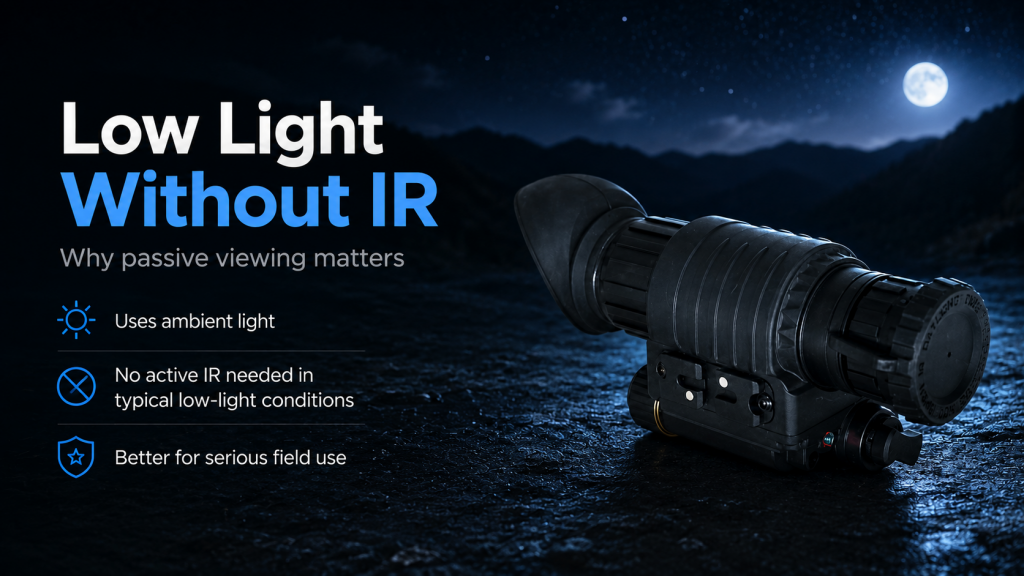
One of the biggest differences is passive viewing.
Passive viewing means using available light instead of turning on an infrared illuminator.
A PVS-14 can often use moonlight, starlight, and other ambient light to produce a usable image. The actual performance depends on the tube quality, including FOM, SNR, resolution, phosphor type, and overall device build.
Digital night vision often depends much more on IR illumination in darker scenes. With IR turned on, the image may look good. Without IR, many digital devices become much weaker.
For casual users, this may not matter.
For serious users, it does.
IR light may be invisible to the naked eye, but it can still be visible to other night vision devices. It also changes how naturally you can move and observe in darkness.
If passive low-light viewing is important, a PVS-14 is usually the better choice.
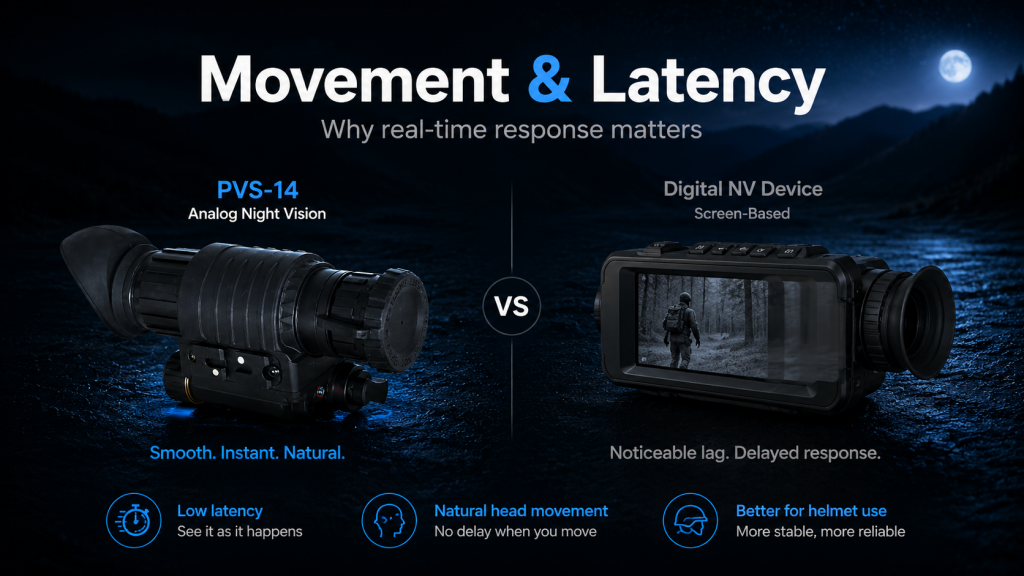
This is the part many buyers only understand after using both types.
Digital night vision has to capture the image, process it, and show it on a small screen. That process can create delay, motion blur, or a screen-like feeling.
When you are standing still, this may not be obvious.
When you are walking, turning your head, or using the device on a helmet, it becomes much more noticeable.
A PVS-14 gives a more immediate viewing experience. The image feels closer to natural vision, which makes movement easier and less tiring.
For handheld viewing, digital night vision can be acceptable.
For helmet-mounted movement, a PVS-14 is normally the more serious tool.
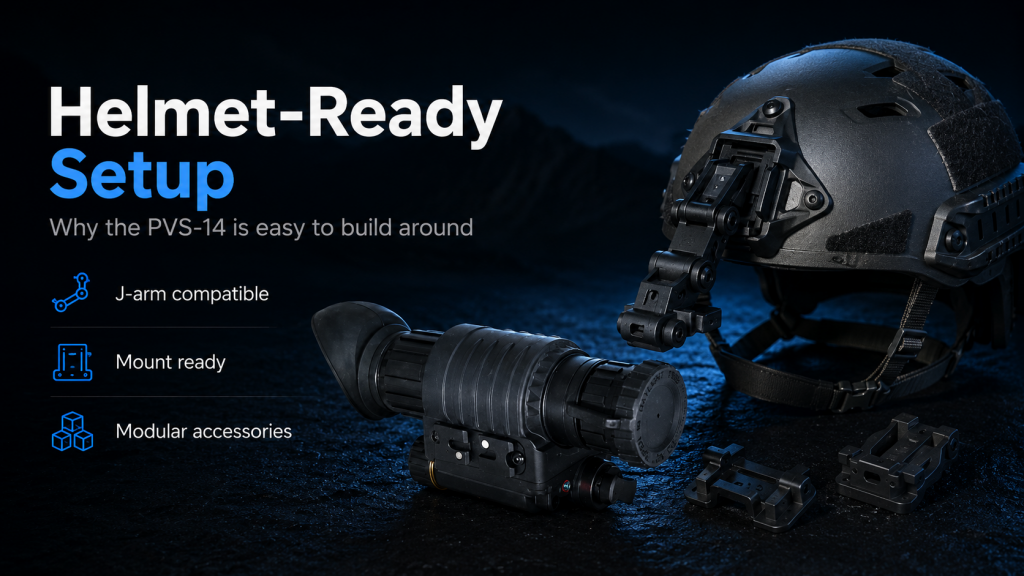
If you only plan to hold the device in your hand for occasional viewing, digital night vision may be enough.
But once helmet mounting enters the conversation, the decision changes.
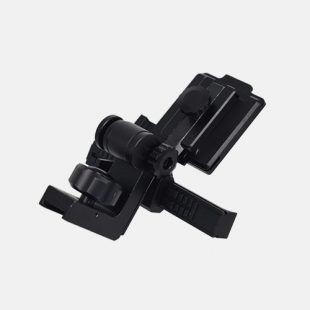
A PVS-14 works well with J-arms, helmet mounts, lens accessories, IR illuminators, and other setup parts. The format is practical, modular, and easy to build around.
Many digital devices are not as comfortable in this role. Weight, balance, display brightness, battery life, and image delay can all become problems.
This is why many serious users start with a PVS-14 style monocular as the foundation of their setup.
It is not just a device. It is a system.
Digital night vision makes sense when the job is simple.
Choose digital night vision if you mainly need casual viewing, short-range property checks, wildlife observation from a fixed position, or night video recording. It can also be a practical starting point when budget is the main concern.
For these uses, digital night vision can offer good value.
But expectations should be realistic. It is not the same as a PVS-14, and it should not be bought for the same job.
Choose a PVS-14 style monocular if you care about serious low-light performance, passive viewing, helmet mounting, low latency, long-session comfort, and accessory compatibility.
This is the better choice for users who want a device they can build a full night vision setup around.
Many customers who begin with digital night vision eventually upgrade because they want a more natural and reliable viewing experience. They are not only paying for a clearer image. They are paying for better real-world usability.
If your main goal is affordable night viewing around a fixed area, digital night vision may be enough.
If your main goal is serious outdoor use, movement, passive observation, or helmet mounting, choose a PVS-14.
That is the cleanest way to think about the decision.
Digital night vision is a useful entry-level tool.
A PVS-14 is a better foundation for serious night vision use.
Digital night vision and PVS-14 night vision are often compared by price, but price does not explain the real difference.
Digital night vision is easier to buy. A PVS-14 is easier to rely on when conditions are less controlled.
For casual use, digital night vision can be practical.
For serious use, a PVS-14 style image intensifier monocular is usually the better long-term choice.
Before buying, do not only ask what looks clear in a product image. Ask what you need the device to do in real darkness.
That question usually makes the right choice much clearer.
For serious use, yes. A PVS-14 usually gives better passive low-light performance, lower latency, better helmet-mounted usability, and a more natural viewing experience.
Yes, if you need casual viewing, short-range observation, or video recording. It is not usually the best option for serious field movement or helmet-mounted use.
A PVS-14 uses an image intensifier tube, optical housing, and night vision components designed for real low-light use. The tube is the main reason the cost is higher.
Some digital devices can work with ambient light, but many perform much better with IR illumination. In very dark conditions, digital night vision often depends on IR.
A PVS-14 still needs some light to amplify. In complete darkness, it may also need IR. Under moonlight or starlight, a good PVS-14 can often work passively.
For casual use, digital night vision can be enough. For buyers who plan to build a serious night vision setup, a PVS-14 is usually the better long-term choice.