Recent Post
When comparing night vision image intensifier tubes, specifications such as FOM, SNR and resolution usually receive most of the attention.
But before any of those specifications matter, the image intensifier has to perform its first job: convert incoming light into electrons.
That job belongs to the photocathode.
The photocathode is the first light-sensitive stage of an image intensifier. Its job is to convert incoming photons into electrons that can then be multiplied and turned back into a visible image.
This is also where terms such as S25 and GaAs enter the discussion.
A photocathode is a light-sensitive surface located near the input side of the image intensifier tube.
When photons from the scene reach the photocathode, some of their energy causes electrons to be emitted.
Those electrons carry the spatial information from the original scene into the next stage of the tube.
The photocathode does not produce the final night vision image by itself.
It begins the process.
After the photocathode converts light into electrons, the microchannel plate multiplies those electrons. The amplified electron image then reaches the phosphor screen, where it becomes visible light again.
For a broader explanation of this process, see
Image Intensifier Tubes: Working Principle and Application
.
Before comparing S25 and GaAs, one terminology point is worth clarifying.
S25 is a spectral-response designation. The S-number system has historically been used to classify photocathode and input-window combinations according to their sensitivity across different wavelengths.
S25 is commonly associated with red-enhanced multialkali photocathodes used in image intensification.
GaAs, or gallium arsenide, is a semiconductor material used to form the photocathode itself.
So while night vision specifications often present “S25” and “GaAs” side by side, they are not technically two material names defined in exactly the same way.
For practical night vision comparison, however, S25 is strongly associated with modern Gen2+ multialkali tubes, while GaAs is commonly associated with Gen3 image intensifiers.
S25 was developed to provide improved response toward the red and near-infrared portion of the spectrum compared with earlier photocathode response types.
In night vision, this type of multialkali photocathode became closely associated with second-generation image intensifier development.
The practical advantage is that the photocathode can respond to a useful portion of both visible and near-infrared illumination present in nighttime environments.
Modern Gen2+ technology has continued to improve beyond early S25 implementations, so the term should not be interpreted as describing one fixed performance level.
Two S25-based tubes can still have significantly different:
GaAs stands for gallium arsenide.
It is a semiconductor material widely associated with third-generation image intensifier technology.
GaAs photocathodes can provide strong sensitivity across visible and near-infrared wavelengths that are useful for low-light imaging.
For reference, scientific GaAs image intensifiers are available with spectral response extending to approximately 920 nm, although the exact response curve and sensitivity of a night vision tube depend on the specific photocathode process, input window and complete tube design.
The key point is not that GaAs simply “amplifies more.”
The photocathode's role is to convert incoming photons into electrons efficiently. Electron multiplication happens later in the MCP.
| Characteristic | S25 | GaAs |
| What the name describes | Spectral-response designation commonly associated with red-enhanced multialkali photocathodes | Gallium arsenide semiconductor photocathode material |
| Common night vision association | Gen2 / Gen2+ | Gen3 |
| Main role | Convert incoming photons into electrons | Convert incoming photons into electrons |
| Near-IR response | Extended into the near-infrared region | Strong visible and near-infrared response depending on design |
| Does it determine final image quality alone? | No | No |
Nighttime illumination is not limited to the wavelengths that look bright to the human eye.
Moonlight, starlight, sky glow and artificial infrared illumination can all contribute photons across different parts of the spectrum.
A photocathode does not respond equally to every wavelength.
Its spectral response describes how effectively it responds as wavelength changes.
This is one reason photocathode technology matters: two photocathodes exposed to the same scene may not convert every part of the available spectrum with the same efficiency.
However, a wider spectral response does not automatically guarantee a cleaner final image.
The electrons still have to pass through the MCP, power supply and output stage before the user sees the result.
Photocathode sensitivity and SNR are related to low-light performance, but they are not the same specification.
Photocathode sensitivity describes how effectively incoming light produces photoelectrons under defined conditions.
SNR describes the useful image signal relative to noise.
A tube can convert incoming photons efficiently while noise elsewhere in the system still affects the final signal-to-noise ratio.
This is why SNR remains an independent specification on an image intensifier datasheet.
For a detailed explanation, see
FOM vs SNR vs Resolution: Which Night Vision Spec Matters Most?
.
Gain is another specification that is frequently confused with photocathode sensitivity.
They describe different stages of image intensification.
The photocathode determines how the incoming optical signal begins its conversion into electrons.
Gain describes how much brighter the final output becomes relative to the input illumination under defined test conditions.
The complete gain result depends on the image intensifier as a system, not only on the photocathode.
This is why two tubes using the same photocathode type can still publish different gain ranges.
The photocathode and microchannel plate are sometimes discussed together because both are essential to modern image intensification.
Their jobs are very different.
| Component | Main Job |
| Photocathode | Converts incoming photons into electrons |
| Microchannel Plate | Multiplies those electrons through secondary electron emission |
A more sensitive photocathode can provide a stronger starting signal, but the MCP still determines how that electron image is multiplied.
This also helps explain why visible scintillation is associated with MCP operation rather than being simply another name for photocathode sensitivity.
The photocathode is located at the input side of the image intensifier.
The phosphor screen is at the output side.
They perform opposite conversion steps:
Phosphor Screen: Electrons → Visible Light
This means GaAs does not mean white phosphor, and S25 does not mean green phosphor.
For example, LinduNV currently lists GaAs Gen3 MX10160 tubes with both P43 green phosphor and P45 white phosphor options.
Likewise, Gen2+ S25 tubes can also be configured with P43 or P45 depending on the product.
Photocathode type determines how light enters the electron-amplification process. Phosphor type determines the visible presentation at the other end of the tube.
Not by itself.
GaAs photocathodes are strongly associated with Gen3 technology and can provide excellent low-light sensitivity.
But the final image still depends on the complete tube.
Consider the current LinduNV NVT6 MX10160 specifications.
The Gen2+ S25 and Gen3 GaAs configurations are both listed at the FOM1800+ level with SNR of at least 28 and resolution of at least 64 lp/mm.
Their gain ranges differ, and the photocathode technologies are different, but the generation label alone does not provide a complete description of what the user will see.
This is an important reason to compare the actual specification sheet instead of treating “Gen3” as a single performance number.
Knowing that two tubes both use GaAs photocathodes does not mean their images will be identical.
They may still differ in:
The objective and eyepiece optics of the finished night vision device also affect what finally reaches the user's eye.
The same principle applies to S25-based Gen2+ tubes.
The MX10160 is a useful example because the physical tube format and gain-control architecture can remain familiar while the photocathode technology changes.
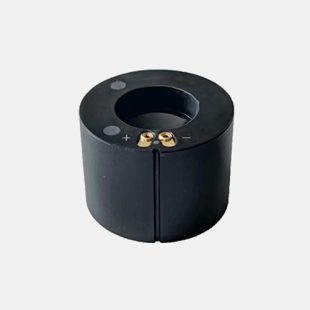
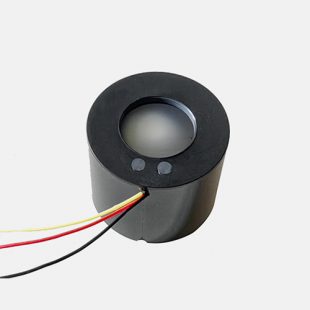
Current LinduNV MX10160 configurations include:
| Configuration | Gen2+ | Gen3 |
| Photocathode | S25 | GaAs |
| Gain mode | Auto Gain | Auto Gain |
| Phosphor options | P43 / P45 depending on configuration | P43 / P45 depending on configuration |
| Published tube life | 10,000 h | 10,000 h |
Current configurations can be reviewed on the
MX10160 Gen3 Image Intensifier Tube
product page.
MX11769 provides another useful comparison.
Current LinduNV MX11769 Gen2+ configurations use an S25 photocathode, while Gen3 configurations use GaAs.
Both remain MX11769-style manual-gain tubes.
This demonstrates another important distinction:
Photocathode type and gain-control architecture are separate specifications.
S25 does not mean auto gain, and GaAs does not mean manual gain.
In the current LinduNV range, MX10160 uses auto gain while MX11769 supports manual gain, regardless of whether the configuration is Gen2+ S25 or Gen3 GaAs.
See the current
MX11769 Gen2+ S25
and
MX11769 Gen3 GaAs
configurations for comparison.
Photocathode type is worth checking, but it should not be used alone to rank two tubes.
A more useful comparison includes:
The objective lens and eyepiece of the finished NVG should also be considered because tube performance can only be used effectively if the optical system transmits and presents the image well.
The photocathode is one of the most important components inside an image intensifier because it determines how the incoming optical signal enters the electron-amplification process.
S25 and GaAs represent different photocathode technologies commonly associated with Gen2+ and Gen3 night vision.
But neither term is a complete image-quality specification.
The photocathode determines how the signal begins. The MCP, power supply, phosphor screen and optics determine how that signal is amplified, displayed and ultimately seen by the user.
That is why two tubes with different photocathode technologies can sometimes occupy similar FOM or SNR performance tiers, while two tubes using the same photocathode type can still look noticeably different.
The photocathode converts incoming photons from the scene into electrons. Those electrons are then multiplied by the microchannel plate before being converted back into visible light at the phosphor screen.
More precisely, S25 is a standardized spectral-response designation commonly associated with red-enhanced multialkali photocathodes. It is not a material name in exactly the same sense as GaAs.
GaAs is gallium arsenide, a semiconductor material commonly used in Gen3 image intensifier photocathodes for low-light visible and near-infrared sensitivity.
GaAs is associated with Gen3 technology and strong low-light sensitivity, but the photocathode alone does not determine final image quality. SNR, resolution, gain, EBI, MCP performance, phosphor, optics and tube condition also matter.
No. Photocathode sensitivity describes the response of the photocathode to incoming light, while SNR describes useful image signal relative to noise under defined test conditions.
No. Photocathode and phosphor are separate parts of the image intensifier. A GaAs tube can use green P43 or white P45 phosphor depending on the configuration.
No. S25 describes the photocathode side of the tube. Gen2+ S25 image intensifiers can also be configured with either green or white phosphor depending on the product.
No. Gain-control architecture is a separate design choice. For example, current LinduNV MX10160 tubes use auto gain while MX11769 tubes support manual gain, and both tube formats are available in Gen2+ S25 and Gen3 GaAs configurations.